Abigail’s journalism and writing portfolio includes articles on environmental design and textiles, artisans working with cloth/fiber, and curatorial texts. She has also co-written the introductions to several publications on cultural preservation and photography, as well as contributing materials to books and catalogues on art, craft, and sustainability.
Abigail began her career as a researcher for documentary film, followed by several decades as a creative director and producer for educational multimedia projects. She has also been active as an advisor for global fashion and textile initiatives. Her travels have encompassed visiting communities in Bhutan, Nepal, India, Mexico, the Hopi Nation, Bulgaria, Greece, Italy, Macedonia, Morocco, Serbia, Southeast Asia, Turkey, as well as rural sites throughout the United States.
Studio interviews and writing projects have been featured by Dwell, Hyperallergic, Moowon, Plural Magazine, Surface Design Journal, Table Magazine, The New York Times, Amica Bulgaria, Harper's Bazaar Romania, Marie Claire South Africa, and numerous online and print journals. She has also been profiled or quoted in the books Fiber Art Today, Folk Fashion: Understanding Handmade Clothes, Slow Stitch: Mindful and Contemplative Textile Art, and The Earthkeepers Handbook.
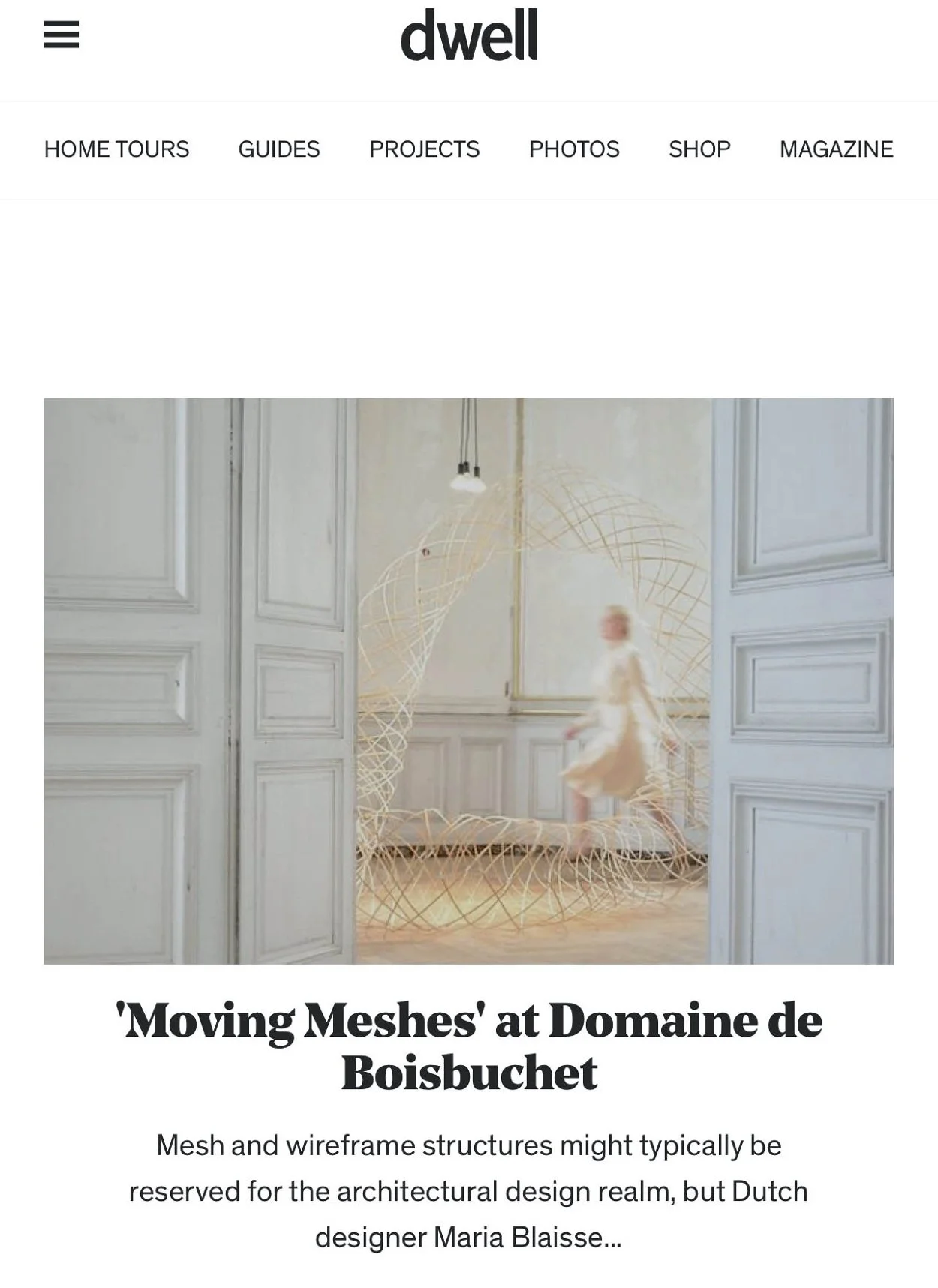
Intentionally ambiguous yet painstakingly researched, Moving Meshes asks the question: Should the human body or should formal considerations take the lead when considering the parameters of modern interiors? Hovering at the intersection of organic sculpture and costume design, each of Blaise's bamboo frameworks is a flexible and wearable pavilion of sorts and fills space in a manner reflective of Shigeru Ban's structures and their conceptual exploration of transparency, the spherical, and the open plan. The installation includes five delicate, though resilient, bamboo works and a video projection that helps to narrate a range of permutations and the overall choreography of space.
Abigail Doan, Dwell
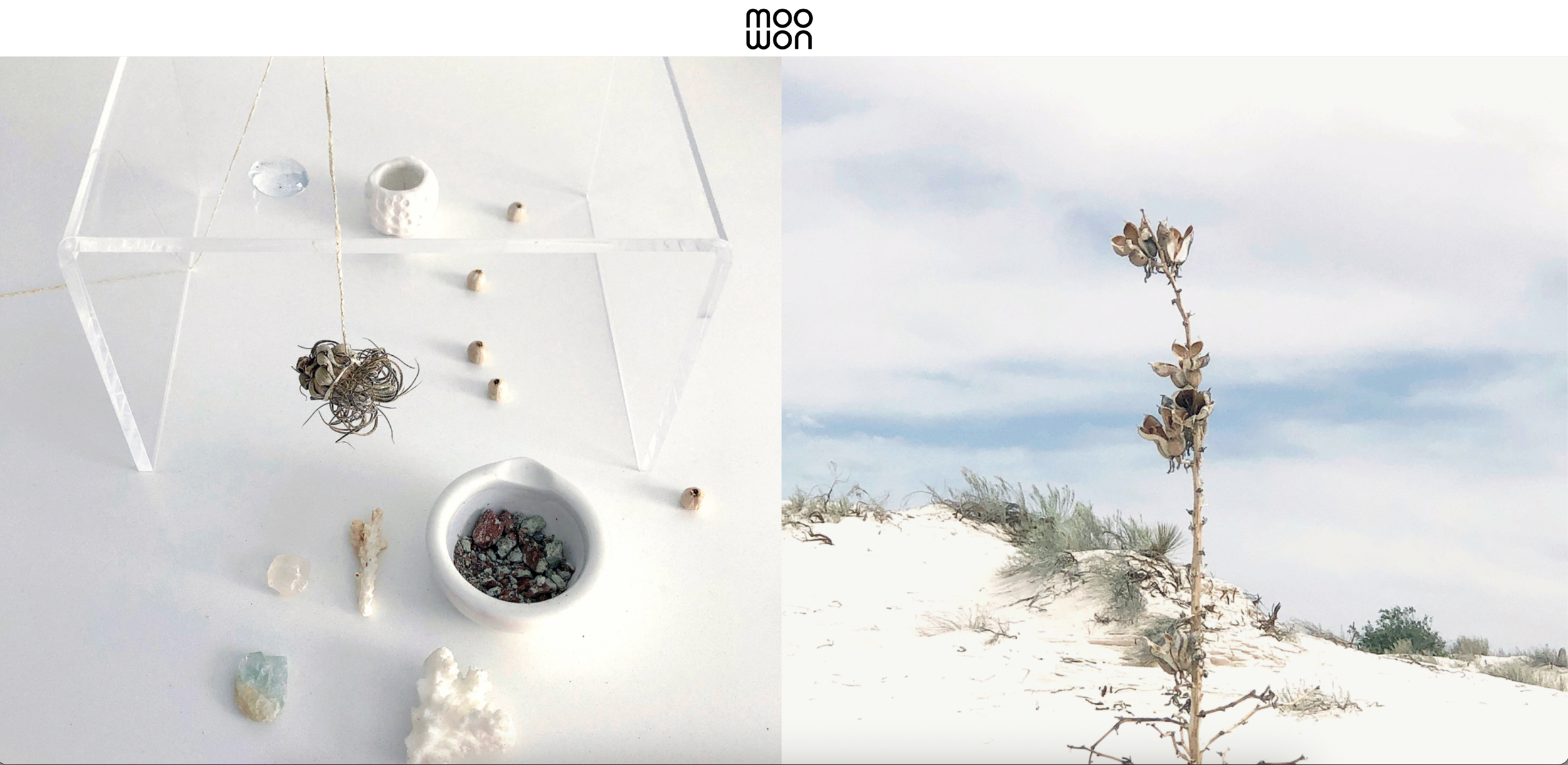
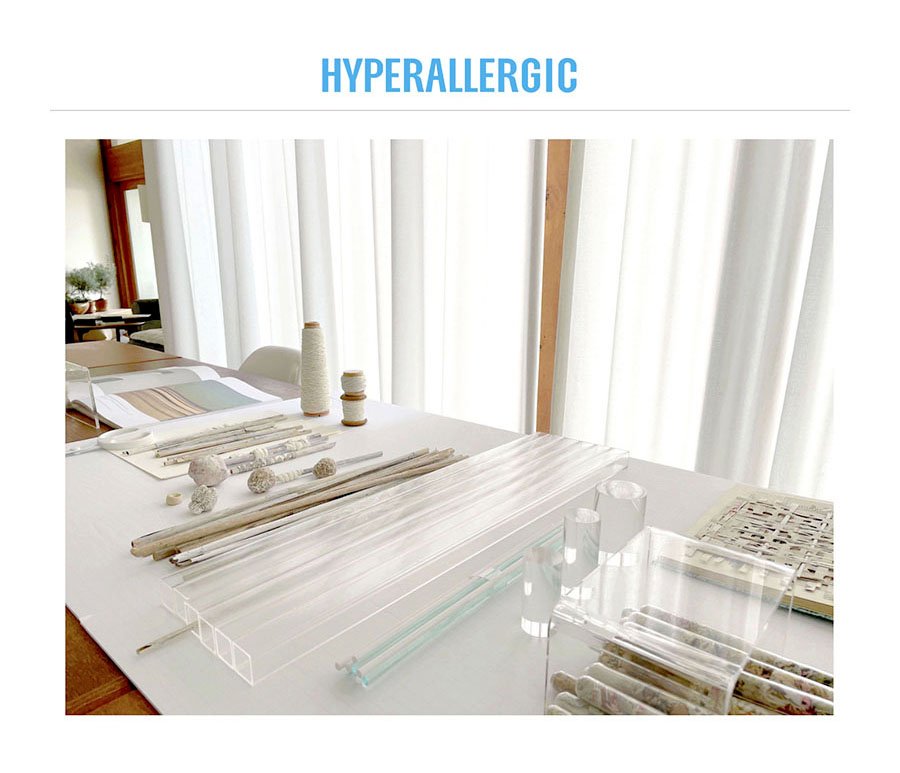
The objects and sculptural forms populating my rural lakeside studio serve as an evolving archive of materials to be installed and documented in modifiable ways. Fiber, plastics, soil/clay, and handmade tools serve as counterpoints to photographic recordings of ideas about loss, preservation, resilience, and transparency. My workspace is an open plan of sorts where I can build and reassemble forms as well as integrate views beyond my studio’s windows … This process allows me to think about movements and changes we are all witnessing from the anchor point of an interior sanctuary.
Abigail Doan, A View from the Easel, Hyperallergic
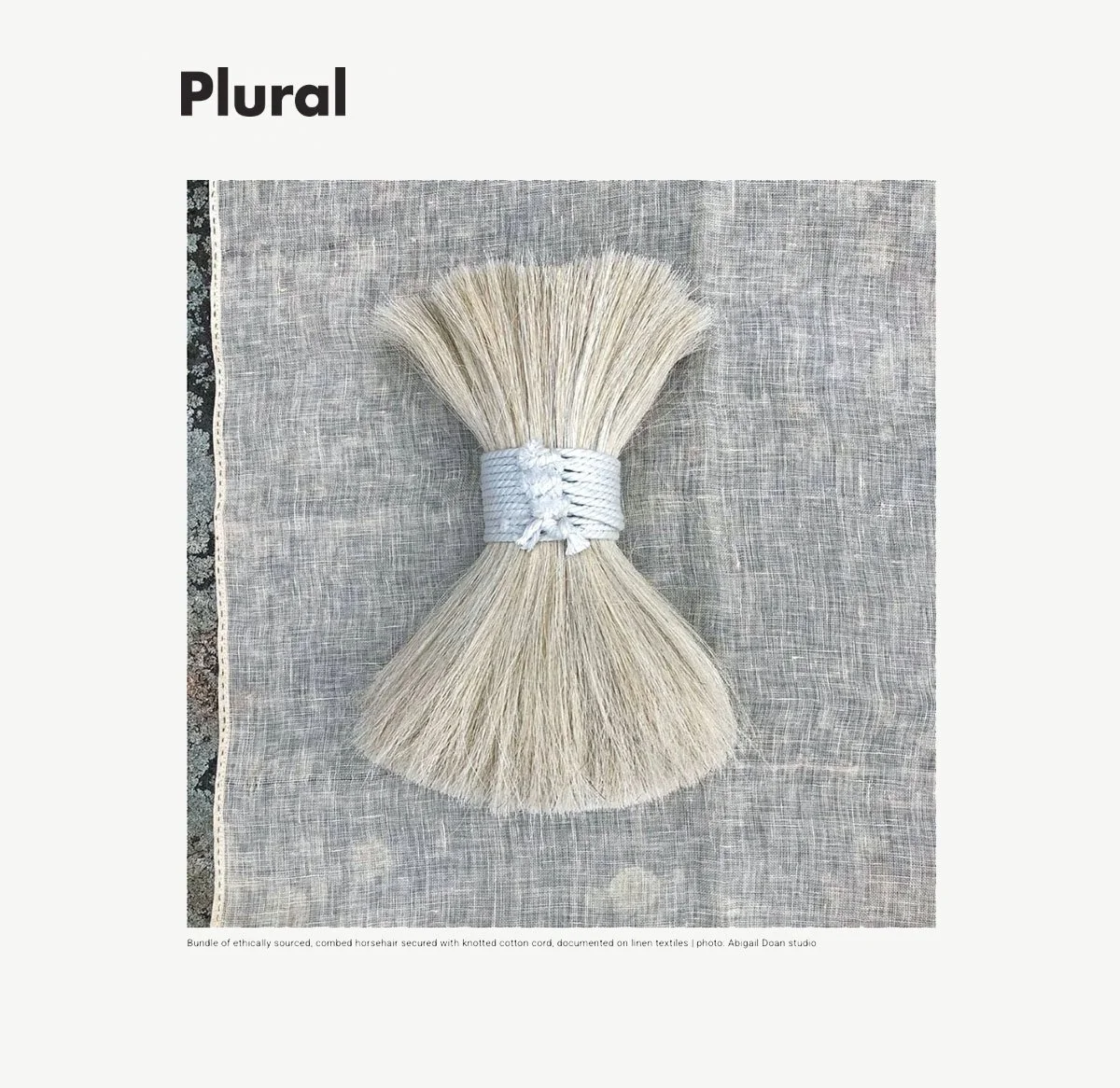
Floating Vessels: A Wave of Responses to Environmental Space, Materials, and Observations
What is the vision behind your art?
I honestly feel that art and design studios put too much emphasis on continuously designing, making, and producing. I have come to allow for space and reflection in my practice, where undoing, options for not making, and preserving take precedence – all with a focus on observation.
I love to create beautiful or provocative objects, but I also now carefully consider what needs to be made and what the lasting impact will be. The objects and texts that I have accumulated in my studio library serve as an evolving archive of materials to be installed and shared in a variety of ways. On some level, my artistic vision can be seen as a social practice, as I emphasize the process of assembling materials more than the finished product or object.
– Abigail Doan, Plural Magazine
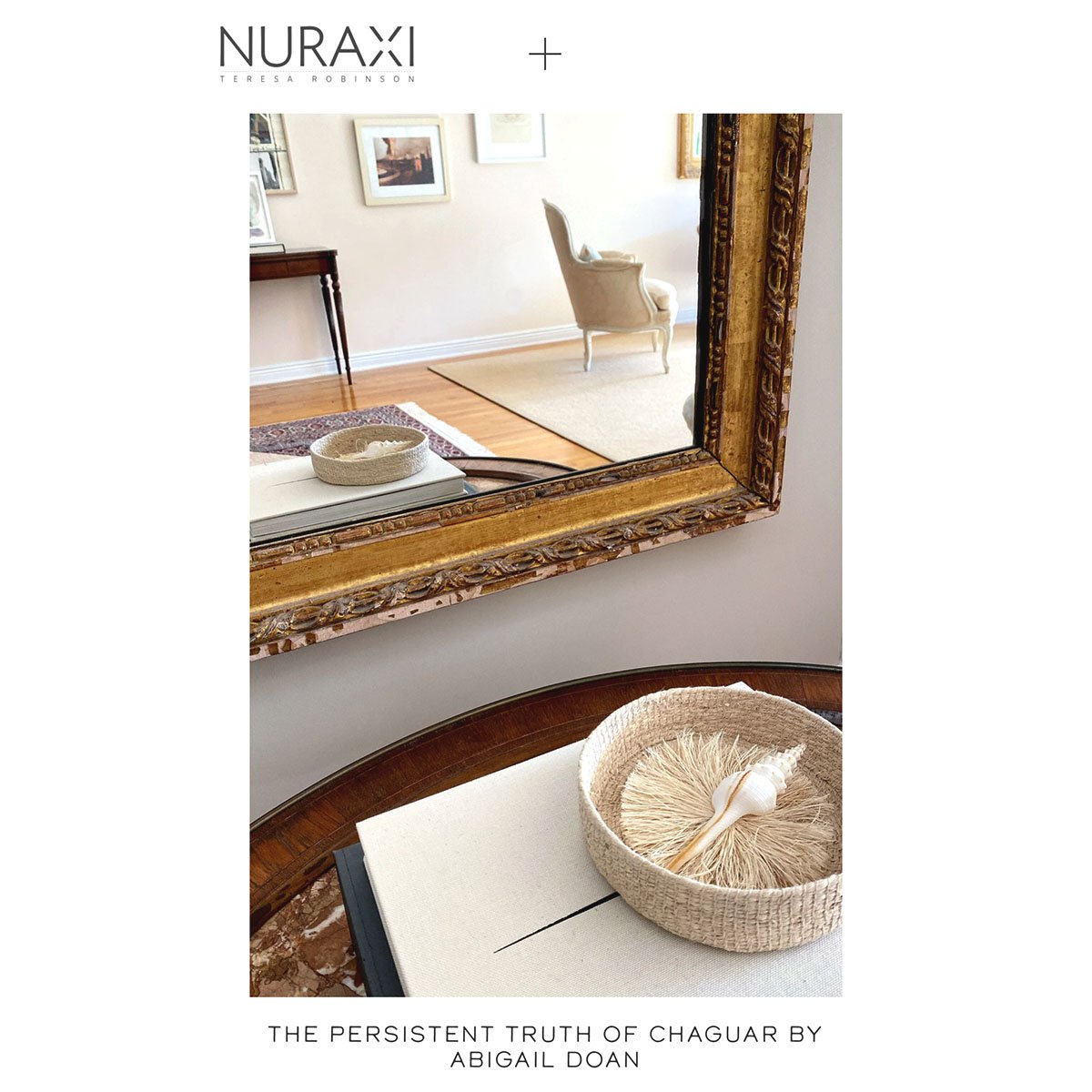
I often think about who made the baskets that I live with, the group walks that artisans set off on to procure the fiber, the intergenerational conversations along the way, the challenges faced by women working together to preserve what matters most to their families and communities. I have such respect for these bold individuals and the collective choices they have made to create objects of lasting value.
These visions calm me in unexpected ways, reminding me that I, too, am responsible for identifying the soundest solution at every turn. What might not be visible are the buried histories and prejudices that indigenous peoples have endured for centuries.
Chaguar, in this context, highlights a persistent truth, and it is this that draws me back, again and again, to fiber’s possibilities as a resilient touchstone and a trail map for new terrain.
– Abigail Doan, NURAXI journal